

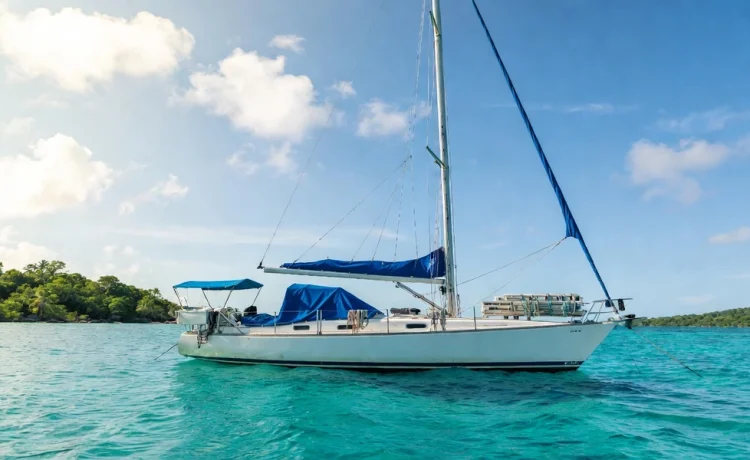

Ask any seasoned cruiser what separates a comfortable, well-run boat from a chaotic, frustrating one, and storage will come up faster than you’d expect. It sounds mundane – lockers, bins, bags, and brackets – but on a long voyage, storage is quietly one of the most important systems on your vessel. It protects your gear, keeps your boat safe, preserves your sanity, and can even affect how the boat handles at sea.
When you’re coastal cruising for a weekend, a little disorganization is harmless. When you’re crossing oceans or living aboard for months, the same disorganization becomes expensive, dangerous, and exhausting. This guide walks through the unique storage challenges of long-distance cruising and liveaboard life – and the practical solutions that experienced cruisers rely on to keep their boats protected and their voyages enjoyable.
Why Storage Is a Bigger Deal Than New Cruisers Expect
The move from occasional boating to serious cruising changes the storage equation completely. Suddenly you’re carrying weeks of provisions, spare parts for systems that must not fail, tools, safety gear, personal belongings, and everything needed to actually live – all within a hull that offers a fraction of the space of the smallest apartment.
A few realities make cruising storage uniquely demanding:
- Constant motion. A boat at sea never stops moving. Anything not properly secured will shift, slide, fall, and break – potentially injuring crew or damaging the boat.
- Relentless moisture. Salt air, humidity, condensation, and the occasional leak conspire to corrode, mildew, and ruin anything vulnerable that isn’t stored with protection in mind.
- No quick resupply. When the nearest chandlery is a thousand miles away, protecting what you’ve got matters far more than it does near a marina. A ruined spare is a real problem, not a minor annoyance.
- Weight and balance. Where you store heavy items affects how the boat sits and sails. Poor weight distribution makes a boat slower, less comfortable, and harder to handle.
Understanding these pressures is the first step. Once you see storage as a protective system rather than just “putting stuff away,” every decision you make gets smarter.
The Enemy Below: Managing Moisture and Damp
If there’s one villain in the cruising storage story, it’s moisture. It arrives from every direction – humid air, salt spray, condensation forming on cool hull surfaces, and the inevitable small leaks that every boat develops. Left unchecked, it destroys clothing, corrodes tools, spoils food, and breeds the mildew smell that haunts so many boats.
Practical moisture defenses
- Keep air moving. Stagnant air is where mildew thrives. Leave gaps behind and beneath stowed items, use louvered locker doors where possible, and consider small solar or battery vents for closed compartments.
- Use desiccants. Reusable moisture absorbers and silica gel packs tucked into lockers and gear bags make a real difference, especially in the tropics or during long passages when hatches stay closed.
- Choose waterproof containers. For anything that truly can’t get wet – documents, electronics, spare bedding – sealed dry boxes and dry bags are non-negotiable. Think of them as insurance.
- Lift gear off the bilge. Water collects low. Storing items on racks, slats, or in raised bins keeps them out of the damp that gathers in the bottom of lockers.
- The cruisers who stay dry aren’t lucky – they’re systematic. They assume moisture is always trying to get in and they build their storage around defeating it.
Securing Everything for Life at Sea
The second great challenge is motion. A boat heeled over and pounding through a seaway is a hostile environment for anything loose. A drawer that flies open, a can that rolls free, or a heavy toolbox that breaks its lashing can go from minor to dangerous in an instant.
How experienced cruisers keep things in place
- Positive-latching lockers. Every locker and drawer should have a latch that holds when the boat is upside down, not just a friction catch. This is one of the first upgrades many cruisers make.
- Fiddles and bins. Raised edges (fiddles) on shelves and dedicated bins stop contents from sliding off as the boat moves. Bins also let you remove a whole group of items at once.
- Non-slip liners. Rubberized matting in lockers and on shelves dramatically reduces sliding and the maddening rattle that keeps you awake on passage.
- Lashing points and netting. For larger or oddly shaped items, straps, bungees, and cargo netting turn an open space into secure storage.
The test is simple: before any passage, imagine the boat rolled hard onto its side. Anything that would move needs to be secured better. It’s a quick mental exercise that prevents a lot of broken gear and bruised shins.
Making the Most of Every Cubic Inch
Cruising boats have surprisingly little usable space, and what they have is often awkwardly shaped. The art of cruising storage is turning those odd nooks into functional, accessible stowage without creating a chaotic jumble you have to unpack to find anything.
Space-maximizing strategies
- Go vertical. Hanging organizers, over-door pockets, and stackable systems use height that would otherwise be wasted.
- Exploit dead space. The voids behind settees, under bunks, beneath the cockpit sole, and inside the hull sides are prime real estate for items you don’t need often.
- Use soft, collapsible storage. Soft bags and collapsible bins flex to fill irregular spaces and can be stowed flat when empty – a big advantage over rigid boxes on a boat.
- Vacuum-compress bulky soft goods. Off-season clothing, spare bedding, and towels shrink dramatically in vacuum bags, freeing up lockers for things that matter more.
A well-chosen set of storage accessories can transform a boat’s livability. If you’re building out your own system and want to see what’s worth investing in, this roundup of the
best boat storage and accessories for boaters in 2026 is a practical starting point – it covers the bins, organizers, and gear that hold up to real cruising conditions rather than failing after one salty season.
Organizing by Access: The System That Saves Your Sanity
Storage isn’t just about fitting everything in – it’s about being able to find it again. On a long voyage, tearing the boat apart to locate a single fitting in a rising wind is more than frustrating; it’s a safety issue. Smart cruisers organize by how often and how urgently they need things.
- Daily items go in the most accessible spots – galley essentials, foul-weather gear, frequently used tools.
- Safety gear goes where it can be reached instantly, in the dark, by anyone aboard. Everyone should know exactly where it lives.
- Occasional items can live in harder-to-reach spaces – deep lockers, under bunks, the bottom of the vee-berth.
- Rarely used spares go in the deepest, least convenient storage, since you’ll dig for them only occasionally.
Then – and this is the step most people skip – write it down. A simple inventory or storage map, whether a notebook or a phone note, saves countless hours and arguments. When you can look up exactly which locker holds the spare impeller, you’ve already won.
Protecting the Boat Itself, Not Just the Gear
Good storage protects more than your belongings – it protects the vessel. Heavy items stowed high or too far forward hurt the boat’s motion and performance. Gear that shifts can damage the interior or, worse, puncture the hull from inside during a knockdown. Corrosion from poorly stored batteries or chemicals can create serious hazards.
A few boat-protecting principles:
- Keep weight low and centered to preserve stability and a kind motion at sea.
- Store hazardous items safely – fuel, propane, and chemicals in dedicated, ventilated, sealed locations away from living spaces.
- Protect through-hulls and systems by not burying seacocks and critical equipment under mountains of gear you’d have to move in an emergency.
When you think of storage as part of the boat’s safety and performance – not just housekeeping – you make better decisions about what goes where.
Storage Zones: Thinking Room by Room
One approach that helps cruisers tame the chaos is to think of the boat as a series of storage zones, each with its own logic. Rather than treating the whole interior as one undifferentiated space to cram things into, you assign a purpose to each area based on its location, accessibility, and environment.
- The galley zone holds food, cookware, and daily consumables. Keep frequently used items at hand and heavier stores lower and well secured.
- The wet zone – typically near the companionway – is where foul-weather gear, boots, and dripping items live, kept separate from anything that must stay dry.
- The workshop zone concentrates tools, spares, and repair materials in one findable place, so fixing something at sea doesn’t turn into a scavenger hunt.
- The living zone holds clothing, books, and personal items, organized so each crew member can access their own gear without disturbing others.
Zoning brings order to the whole boat. When every category has a logical home, stowing and retrieving become intuitive, and the boat stops feeling like a puzzle you have to solve every time you need something.
Provisioning Storage for the Long Haul
Food storage deserves special attention on an extended voyage, because you’re carrying weeks of provisions and there’s no corner shop offshore. Done well, provisioning storage keeps food fresh, findable, and protected. Done badly, it means spoiled stores, weevils in the flour, and cans you can’t identify because the labels soaked off.
- Remove excess packaging before stowing – cardboard harbors moisture and insects, and takes up needless space. Transfer dry goods into sealed, labeled containers.
- Waterproof your labels or mark cans directly, since paper labels dissolve in the bilge and leave you playing mystery-can roulette.
- Store by category and date so you can rotate stock and always know what you have and where it is.
- Keep a provisioning log to track what’s aboard and where it’s stowed – invaluable when the pasta is buried in a locker you haven’t opened in a month.
A little effort here pays off throughout the voyage, turning meals from a source of stress into one of the daily pleasures of cruising life.
A Few Habits That Make It All Work
The best storage systems are backed by good habits. Experienced cruisers tend to share a handful:
- Stow as you go – put things away immediately rather than letting a pile build up.
- Do a pre-passage check – walk the boat before every trip and secure anything loose.
- Rotate provisions – use older stores first and keep track of what’s aboard.
- Reassess regularly – what worked in the marina may not work at sea; adjust as you learn.
These small routines compound into a boat that stays organized, protected, and pleasant to live aboard even after months at sea.
Adapting Your Storage as the Voyage Evolves
One thing that surprises many first-time cruisers is that their storage needs change over the course of a long voyage – sometimes dramatically. The system that worked perfectly for a two-week shakedown can feel wrong three months in, as you learn how you actually live aboard and what you truly use.
The best cruisers treat their storage as a living system rather than a fixed layout. They notice which lockers they open constantly and which they never touch, then reorganize so the useful stuff is convenient and the dead weight gets reconsidered. They pay attention to what keeps getting damp, what keeps rattling, and what they can never find, and they fix those specific problems as they surface.
It’s also worth periodically asking a harder question: do you still need everything aboard? Cruisers are famous for carrying “just in case” items that never get used while precious space stays occupied. Every few weeks, a quick honest review – keeping what earns its place and offloading what doesn’t – keeps the boat light, organized, and pleasant. Storage, like the voyage itself, works best when you stay flexible and keep learning.
Final Thoughts: Storage Is Freedom
It’s easy to think of storage as a chore, but for cruisers it’s something closer to freedom. A well-stored boat is safer, sails better, smells better, and frees you from the constant low-grade stress of clutter and lost gear. It lets you focus on the reason you went cruising in the first place – the sunsets, the anchorages, the sense of self-sufficient adventure.
Invest the time to build a thoughtful storage system, protect it with good habits, and choose accessories that stand up to real conditions. Your boat, your gear, and your future self on a midnight watch will all thank you.
Whether you’re looking to learn more about boating, buy a boat or yacht, rent a vessel for your next adventure, or find the right accessories for life on the water, US Nautics has you covered – with practical boating guides, boats and yachts for sale, and honest, hands-on reviews of the gear and accessories that matter most. It’s a genuinely useful resource to bookmark and keep coming back to as your time on the water grows.
