


A smiling photo from atop a giant animal hides a painful story underneath. Anyone comparing an ethical elephant sanctuary thailand listing with a trekking camp should know why. Backbones of these creatures were never built to hold human weight. Seats, chains plus passengers press directly on sensitive bony ridges. Understanding that harm helps guests choose kinder options during their trip.
Why the Backbone Cannot Handle Riders?
The spine has sharp bony ridges pointing upward with little padding above them. Weight pressing on those ridges causes bruising, sores, and long-term pain.
How Seats Make the Problem Worse
Wooden or metal seats add noticeable extra load before any passenger climbs aboard. Straps rub against skin for hours, leaving wounds that easily become infected.
Welfare researchers suggest a healthy adult should carry no more than about 150 kilograms. Two adults plus a seat often exceed that figure quickly. Long working days under hot sun add exhaustion to physical strain. Many camps also allow little rest between trips.
Signs of Harm Guests Often Miss
Injuries usually develop slowly beneath skin or seat padding. Look closely for these warning signs during any visit.
- Open sores or scars appear across the upper back area.
- Animals sway their heads repeatedly while standing in one spot.
- Chains stay fastened around legs between each guest session.
- Handlers carry hooks or sharp tools during working hours.
- Feet look cracked from standing on hard concrete surfaces daily.
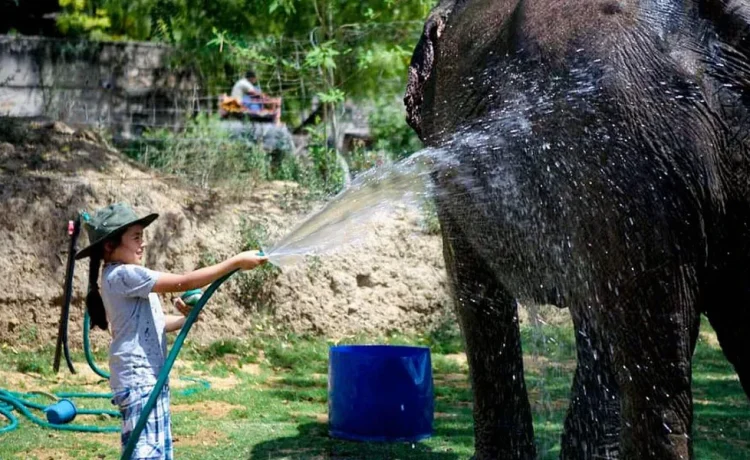
Injury often starts long before the first passenger arrives. Many young animals endure harsh breaking methods to accept riders. A genuine ethical elephant sanctuary thailand refuses rides completely, along with bathing sessions. Guests observe from platforms or trails instead of climbing aboard.
Kinder Choices for Your Next Visit
Responsible options exist for anyone wanting close sightings. These habits support welfare rather than profit.
- Book only places that clearly ban riding in written policies.
- Watch the herd forage freely from a respectful viewing distance.
- Skip photo deals involving hugging, bathing, or feeding by hand.
| Feature | Riding Camp | Welfare Sanctuary |
| Contact with animals | Riders sit on the back | Guests watch from a distance |
| Daily routine | Long trekking hours | Free foraging plus socializing |
| Equipment used | Seats, chains plus hooks | No coercive tools |
| Health focus | Profit from rides | Rescue plus long-term care |
| Breeding | Calves bred for attractions | No breeding for tourism |
The contrast shows how daily life changes once riding stops. Choosing welfare-focused places directly supports that better routine.
Riding Harm FAQ
- Are short rides harmless for a strong adult animal? No, repeated short rides still press on sensitive bony ridges.
- Do bareback rides avoid injury? No, rider weight still sits directly on the backbone.
- How can guests confirm a place bans riding? Check written policies, then look for seats or chains on site.
- Are rides officially discouraged by the tourism industry? Yes, major industry bodies now classify riding as an unacceptable practice.
- Is there a local animal welfare law? Yes, a 2014 welfare act exists, though enforcement remains uneven.
Pick Compassion Instead
Riding loads strain a frame designed for roaming, not carrying people. Bulky saddles, tight straps, along with long working days deepen that injury. Wounds often stay out of sight beneath padding or skin. Book welfare-focused refuges that ban riding in written policy. Watching herds roam freely respects their health far more than climbing aboard.
