

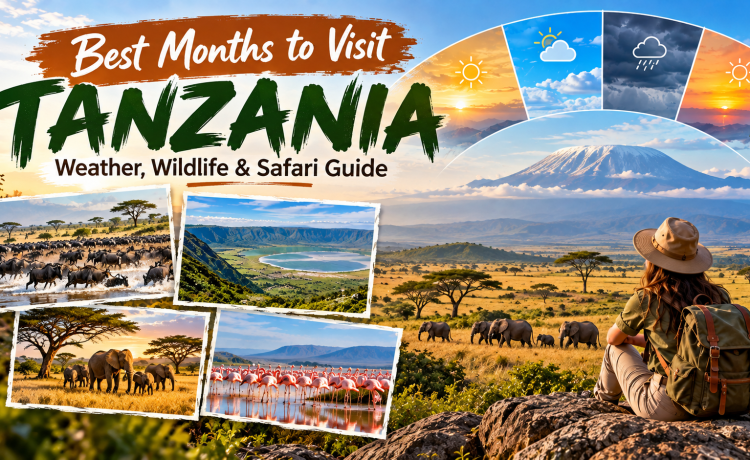

Should you visit Tanzania for a dry-season safari, the Great Migration, a quiet beach, or lower travel costs?
The best months to visit Tanzania depend on what matters most to you. Conditions also vary by region: the Serengeti, southern parks, Mount Kilimanjaro, and Zanzibar can have different weather at the same time. Use the seasonal guide below to match your dates to your wildlife goals and full itinerary.
Best Months to Visit Tanzania for Your Travel Goals
There is no single best month for every trip. June to October often suits classic safaris, January and February are popular for calving season, and wetter months can bring green scenery with fewer visitors.
Visit from June to October for Dry-Season Safaris
These months are generally dry across many safari areas. With less grass and fewer water sources, animals can be easier to spot, especially near rivers and waterholes. This is a popular time to visit, so expect higher demand and busier parks.
Plan for January or February to See Calving-Season Wildlife
The southern Serengeti and Ndutu area are well-known places to see wildebeest calves during this period. Calves draw predators, which can make game drives especially rewarding. Herd locations still depend on rainfall and grazing, so sightings are not guaranteed on a set date.
Consider the Green Seasons for Quieter, Potentially Better-Value Travel
Short rains often fall around November and December. The longer rains usually run from March through May, though timing and rainfall vary by region. These months can bring lush views and fewer visitors, but rain may make roads muddy or lead to changes in travel plans.
Understand Tanzania’s Seasons Before Choosing Your Dates
Tanzania has broad wet and dry seasons, but rain and temperatures differ by location and elevation. A cool morning in the Ngorongoro highlands can feel very different from a humid afternoon on the coast. Check current Tanzania Meteorological Authority forecasts and climate information when finalizing travel dates.
Travel During the Dry Season for Easier Road Conditions
June to October is generally the main dry-season window in many safari areas. Firmer roads can make it easier to travel between parks, while open vegetation may help with game viewing and photography. Pack a warm layer for early drives, especially in high-altitude areas.
Expect Short Spells of Rain Around November and December
The short rains often arrive as showers rather than nonstop rain, though patterns change from year to year and place to place. A wet morning does not always disrupt a full day of safari. Rain can also renew grass and affect where animals graze.
Prepare for the Long Rains From March Through May
March to May is the main rainy period in many parts of Tanzania. Some routes may become difficult, and some camps or lodges may change their opening dates. Ask your tour operator about road access, camp schedules, and backup plans before you book.
Match Safari Timing to the Wildlife You Want to See
Wildlife moves in response to rain, fresh grass, and water, not a fixed calendar. Seasonal patterns help you plan, but no date can promise a specific sighting. Choose a trip with enough time in your priority areas to give yourself more than one chance.
Follow the Great Migration Across the Serengeti Ecosystem
The Great Migration moves through the Serengeti and nearby areas throughout the year. The southern plains are a common focus during calving season, while the northern Serengeti is known for river-crossing views later in the year. Crossings vary in place and timing, so even a well-planned trip may miss them.
Look for Strong General Game Viewing in the Dry Months
Reduced vegetation and shrinking water sources can make animals easier to find in many parks from June to October. The experience varies by habitat: a park with open plains offers different views from one with thick woodland. Ask your guide where wildlife has been seen recently and adjust your plans when possible. Also ensure that your Tanzania travel packages include everything you need before you even land in the country.
Choose Birding and Lush Scenery in Wetter Periods
Rain can turn dry areas green and bring seasonal birdlife, making wetter months appealing for bird watchers and photographers. The best time depends on the species you wish to see. Check with Proud African Safari’s specialized guide or a trusted field reference to confirm when and where your target birds are present.
Compare Weather Across Tanzania’s Main Travel Regions
Tanzania is not one uniform climate zone. Safari parks, coastal areas, islands, and highlands can have different temperatures, rain patterns, and travel conditions during the same month. If your trip includes more than one region, check each part separately.
-
- Plan for the northern safari circuit’s seasonal contrasts: The northern circuit includes the Serengeti, Ngorongoro Conservation Area, Tarangire, and Lake Manyara. Dry-season conditions often help with travel and wildlife viewing, while the green months bring fresh growth. Ngorongoro sits at a higher elevation than many nearby areas, so nights and early mornings can feel cold.
- Check conditions separately for southern Tanzania: Ruaha and Nyerere have their own seasonal access and camp schedules. Rainfall can affect roads and travel times, and some camps may close for part of the year. Confirm current park access and lodge dates directly with your tour operator before setting a fixed itinerary.
- Pair safari dates with Zanzibar or Mount Kilimanjaro: Zanzibar is warmer and more humid than many inland safari areas, with its own pattern of rain. Check island conditions if beach days are central to your plans. Kilimanjaro weather also changes with elevation; ask a specialist climbing operator for current advice, and consider the commonly favored January-to-March and June-to-October climbing windows.
Build an Itinerary Around Weather, Crowds, and Practical Trade-Offs
Your best travel month also depends on how much flexibility you have. Fixed dates, flights between parks, and popular camps can limit your options, especially in peak season. A little extra time can help when rain slows a drive or wildlife shifts away from a planned area.
Book Peak-Season Camps and Guides Early
Dry-season safari months and popular migration periods often draw large crowds. Reserve camps, park transports, and specialized guides well ahead if you have fixed dates or a specific location in mind. Early planning matters most for small camps and busy travel periods.
Add Flexibility for Rain and Wildlife Movement
Give priority areas more than one game-drive opportunity when you can. Avoid tight connections between long road transfers and flights, particularly in wetter months. Migration sightings depend on animal movement, so treat river crossings as a possibility rather than a promise.
Conclusion: Choose the Best Month for Your Tanzania Trip
June to October often works well for dry-season safaris, while January and February are popular for calving-season wildlife in the southern Serengeti. Wetter months can offer green scenery and a quieter feel, but you will need more room for changes. Choose the dates for your luxury safari in Tanzania around your main goal, then confirm forecasts, park access, and camp schedules before booking. Make that check early, and you will build a trip that fits both the season and the places you want to see.
Media Contact Information
Steve Saxe
Founder and CEO
Proud African Safaris
+1 617-513-7192
steve@proudafricansafaris.com
Instagram: https://www.instagram.com/proudafricansafaris_/
